

What Is Pasta Primavera?
Pasta Primavera is a vibrant Italian-American dish built around fresh seasonal vegetables, tender pasta, olive oil (or a light cream sauce), garlic, herbs, and Parmesan cheese. The name Primavera means “spring” in Italian, and the recipe celebrates freshness, color, and simplicity.
Unlike heavy pasta dishes, Pasta Primavera focuses on vegetables as the star. It’s light yet satisfying, elegant yet easy enough for weeknights. That balance is exactly why this dish continues to trend year after year in the U.S. food market.
If you are looking for a recipe that feels restaurant-quality but cooks in under 30 minutes, this is it.
Why Pasta Primavera Is So Popular
There are three major reasons this dish consistently performs well:
1. It Fits Modern Eating Habits
- Flexible (vegetarian or add protein)
- Lighter than traditional cream pastas
- Customizable with seasonal produce
- Works for meal prep
2. It’s Visually Appealing
Pinterest and food platforms favor colorful dishes. The natural contrast of zucchini, bell peppers, carrots, cherry tomatoes, and green herbs makes Pasta Primavera highly shareable.
3. It’s Seasonal Yet Evergreen
It peaks in spring and summer but performs well year-round because vegetables are always available.
Ingredients for the Best Pasta Primavera
Pasta
- 12 oz penne, fettuccine, or spaghetti
- Salt (for pasta water)
Vegetables (classic combination)
- 1 zucchini, sliced
- 1 yellow squash, sliced
- 1 red bell pepper, sliced
- 1 carrot, julienned
- 1 cup cherry tomatoes, halved
- 1 cup broccoli florets
- ½ cup peas (fresh or frozen)
Aromatics
- 3 cloves garlic, minced
- 1 small shallot, finely chopped
Sauce Base (choose your style)
Light Olive Oil Version
- 3 tbsp extra virgin olive oil
- ½ cup pasta water
- Juice of ½ lemon
Creamy Version
- ½ cup heavy cream
- ¼ cup grated Parmesan
- ½ cup pasta water
Finishing
- ½ cup freshly grated Parmesan
- Fresh basil
- Fresh parsley
- Black pepper
- Optional red pepper flakes
Step-by-Step Pasta Primavera Recipe
Step 1: Cook the Pasta
Bring a large pot of salted water to a boil. Cook pasta until al dente. Reserve 1 cup of pasta water before draining.
Step 2: Sauté the Vegetables
Heat olive oil in a large skillet over medium heat.
Add:
- Shallots
- Garlic
Cook until fragrant (about 30 seconds).
Add harder vegetables first:
- Carrots
- Broccoli
Cook 2–3 minutes.
Then add:
- Zucchini
- Squash
- Bell peppers
Cook until slightly tender but still vibrant.
Finally, add:
- Cherry tomatoes
- Peas
Cook 1–2 more minutes.
Vegetables should remain colorful and slightly crisp.
Step 3: Build the Sauce
For olive oil version:
- Add lemon juice
- Add ½ cup reserved pasta water
- Simmer briefly
For creamy version:
- Stir in heavy cream
- Add pasta water gradually
- Mix in Parmesan
Step 4: Combine Everything
Add drained pasta directly to the skillet.
Toss well to coat evenly.
Adjust:
- Salt
- Black pepper
- Extra pasta water if needed
Finish with:
- Fresh basil
- Parsley
- Extra Parmesan
Serve immediately.
Pro Tips for Perfect Pasta Primavera
1. Don’t Overcook the Vegetables
Texture matters. Primavera should feel fresh, not soft.
2. Salt Your Pasta Water Properly
It should taste like the sea. This builds flavor from the inside.
3. Use Pasta Water
It creates a silky sauce naturally.
4. Cut Vegetables Uniformly
This ensures even cooking and a beautiful presentation.
5. Finish With Fresh Herbs
They elevate the entire dish.
Best Vegetables for Pasta Primavera
While zucchini and peppers are common, you can rotate vegetables seasonally:
Spring
- Asparagus
- Snap peas
- Baby carrots
Summer
- Cherry tomatoes
- Corn
- Eggplant
Fall
- Mushrooms
- Spinach
- Roasted butternut squash cubes
Winter
- Broccolini
- Kale
- Cauliflower
Protein Add-Ins (Optional)
Pasta Primavera is traditionally vegetarian, but you can add:
- Grilled chicken
- Shrimp
- Salmon
- Tofu
- Chickpeas
If adding protein, cook separately and fold in at the end.
How to Make It Healthier
- Use whole wheat pasta
- Swap cream for Greek yogurt
- Add extra vegetables
- Reduce cheese slightly
- Use minimal oil
It’s naturally nutrient-dense thanks to the vegetable base.
Common Mistakes to Avoid
Overcrowding the Pan
This steams vegetables instead of sautéing them.
Adding All Vegetables at Once
Different textures require different cook times.
Forgetting Acid
A splash of lemon balances richness.
Using Pre-Shredded Cheese
Freshly grated Parmesan melts better.
Pasta Primavera vs Other Vegetable Pastas
DishSauce StyleHeavinessVegetable FocusPasta PrimaveraLight or CreamyMedium-LightHighAlfredoCream-basedHeavyLowAglio e OlioOil-basedLightLowMarinara PastaTomato-basedMediumMedium
Primavera stands out for freshness and flexibility.
Storage & Meal Prep
Refrigerator
Store in airtight container for 3–4 days.
Reheating
Add a splash of water before reheating to restore moisture.
Freezing
Not recommended for creamy versions (texture changes).
Why Pasta Primavera Works for Entertaining
- Visually impressive
- Easy to scale
- Vegetarian-friendly
- Customizable
- Quick to prepare
Serve it with:
- Garlic bread
- Simple green salad
- Sparkling water with lemon
Frequently Asked Questions
Is Pasta Primavera Italian?
It’s Italian-American, inspired by seasonal Italian cooking.
Can I make it dairy-free?
Yes. Use olive oil version and skip cheese or use dairy-free alternatives.
Can I make it gluten-free?
Absolutely. Use gluten-free pasta.
Is it good for meal prep?
Yes, especially the olive oil version.
Final Thoughts
Pasta Primavera is more than just a vegetable pasta — it’s a celebration of freshness, color, and balance. It adapts to seasons, dietary preferences, and personal taste without losing its identity.
If you want a dish that is:
- Easy to prepare
- Nutritious
- Visually stunning
- Highly customizable
- Perfect for weeknights or guests
Then Pasta Primavera deserves a permanent place in your recipe collection.
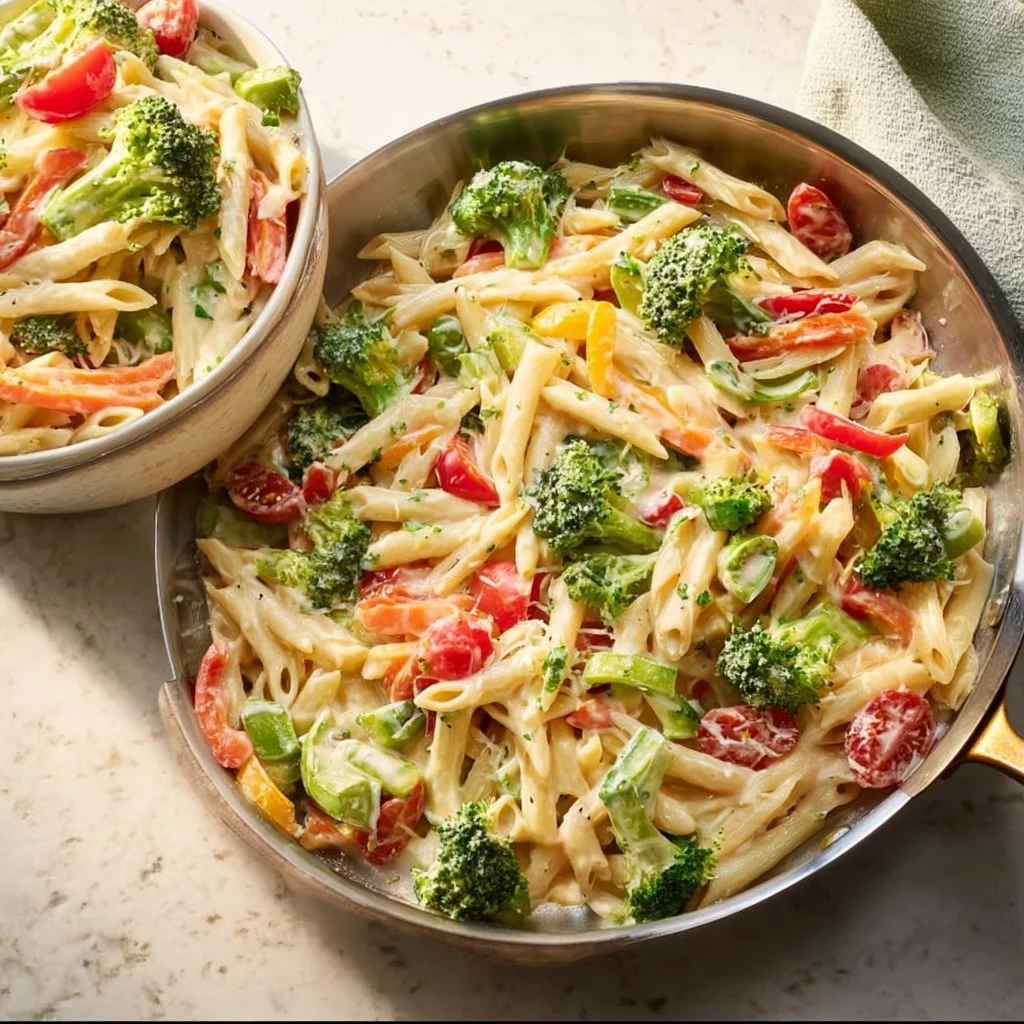
Pasta Primavera
Ingredients
Method
- Bring a large pot of salted water to a boil.
- Cook pasta until al dente, reserving 1 cup of pasta water before draining.
- Heat olive oil in a large skillet over medium heat.
- Add shallots and garlic, cooking until fragrant (about 30 seconds).
- Add harder vegetables first: carrots and broccoli. Cook for 2-3 minutes.
- Then add zucchini, squash, and bell peppers, cooking until slightly tender but still vibrant.
- Finally, add cherry tomatoes and peas, cooking for 1-2 more minutes until colorful.
- For olive oil version: Add lemon juice and ½ cup reserved pasta water, simmering briefly.
- For creamy version: Stir in heavy cream, gradually add pasta water, and mix in Parmesan.
- Add drained pasta directly to the skillet and toss well to coat evenly.
- Adjust seasoning with salt and black pepper, and add extra pasta water if needed.
- Finish with fresh basil, parsley, and extra Parmesan. Serve immediately.